


Grok 4 Fast Reasoning
Grok 4 Fast Reasoning is an artificial intelligence model developed by xAI that utilizes extended computation during the inference phase to solve complex problems 1. Released as part of the broader Grok 4 family, the "Fast Reasoning" variant is distinguished from standard large language models by its use of internal chain-of-thought deliberation before generating a final response 12. This methodology enables the system to verify logical steps, explore multiple potential solution paths, and self-correct, a process often described in the industry as "System 2" thinking 3. The model is primarily integrated into the X social media platform for premium subscribers and made available through the xAI API for enterprise-level development 2.
The model's technical architecture is designed to enhance performance in domains requiring high precision, including advanced mathematics, software engineering, and scientific reasoning 13. According to xAI, Grok 4 Fast Reasoning was trained using reinforcement learning techniques and massive-scale synthetic datasets specifically curated to reinforce correct logical patterns 3. In developer assessments, the model is characterized by its ability to identify errors during the deliberation process and pivot to alternative strategies when an initial logical path fails 4. This capability is intended to mitigate the frequency of hallucinations in technical outputs, which has been a persistent challenge for standard autoregressive models 45.
In the competitive landscape of generative artificial intelligence, Grok 4 Fast Reasoning is positioned as a direct peer to OpenAI's o-series (such as o1 and o3) and DeepSeek-R1 25. Evaluations on standardized benchmarks, such as the American Invitational Mathematics Examination (AIME) and the GPQA graduate-level science assessment, indicate that the model demonstrates improved proficiency in multi-step problem solving compared to previous Grok iterations 5. While standard large language models typically prioritize low-latency response times, the Fast Reasoning variant is targeted at users who require logical accuracy over immediacy, particularly in academic research and complex coding environments 26.
The development and deployment of Grok 4 Fast Reasoning are supported by xAI's "Colossus" supercomputer cluster, which utilizes a significant number of NVIDIA H100 GPUs to handle the high computational overhead required for inference-time reasoning 14. The model's introduction reflects a broader shift in AI development toward optimizing the reasoning phase of model execution rather than focusing solely on pre-training scale 6. Industry analysts note that while the energy and compute requirements for such models are substantial, their utility in specialized tasks—such as auditing smart contracts or formulating mathematical proofs—represents a significant evolution in the application of general-purpose AI 56.
Background
The development of Grok 4 Fast Reasoning followed a period of rapid iteration within xAI’s model lineup, beginning with the release of Grok-1 in late 2023 1. While early iterations of the Grok family prioritized personality and real-time access to social media data, the Grok 4 project signaled a shift toward high-stakes logic and scientific utility 2. This transition was influenced by a broader industry trend toward "reasoning models," which aim to overcome the inherent limitations of standard autoregressive transformers in multi-step problem solving 3.
Prior to the development of Grok 4, xAI utilized its Grok-1.5 and Grok-2 models to establish competitive parity with other frontier models in standard language benchmarks 12. However, independent evaluations and internal testing suggested that traditional scaling—simply increasing parameter counts and training data—was yielding diminishing returns for complex reasoning tasks such as advanced mathematics and symbolic logic 4. In response, xAI focused the Grok 4 series on "test-time compute" scaling, a technique where the model is allocated additional processing time during inference to perform internal chain-of-thought processing 35.
The motivation for the "Fast Reasoning" variant specifically arose from a perceived gap in the market between traditional fast-response models and "slow" reasoning models 5. According to xAI, users required a system that could verify logical steps more rigorously than a standard model without the multi-minute latency associated with comprehensive deliberative systems 1. The development was supported by the completion of xAI’s massive training infrastructure, known as "Colossus," which provided the computational resources necessary to fine-tune the model using large-scale Reinforcement Learning (RL) 26.
At the time of its release, the AI field was characterized by a competitive race to implement "System 2" thinking, a psychological concept referring to slow, deliberate, and logical cognition 4. Models like OpenAI’s o1 and the DeepSeek-R1 series had established a precedent for models that perform internal verification before generating a response 36. Grok 4 Fast Reasoning was positioned as xAI's entry into this category, aiming to optimize the efficiency of this deliberation process to reduce the trade-off between accuracy and speed 5.
Architecture
The architecture of Grok 4 Fast Reasoning is based on a multimodal framework designed to balance computational efficiency with logical depth 23. Unlike standard autoregressive models that generate tokens in a single forward pass, the "Fast Reasoning" variant incorporates extended inference-time compute, allowing the system to engage in internal chain-of-thought deliberation before producing a final output 12. According to documentation provided by Vercel, the model supports a context window of up to 2 million tokens, positioning it for tasks involving large-scale data retrieval and long-form document analysis 3.
The training pipeline for Grok 4 Fast Reasoning utilizes a multi-stage approach consisting of pre-training, supervised fine-tuning (SFT), and reinforcement learning (RL) 2. The pre-training phase relies on a diverse corpus that includes publicly available internet data, third-party datasets licensed by xAI, and internally generated synthetic data 2. This corpus undergoes extensive filtering for quality and safety, utilizing de-duplication and classification techniques to refine the input stream 2.
Post-training methodology is a critical component of the model's reasoning capabilities. xAI employs RL techniques that incorporate human feedback alongside verifiable rewards and model-based grading 2. This process is intended to optimize the model’s performance in specialized domains such as code execution, mathematical reasoning, and tool-calling 2. SFT is applied to specific tasks, including refusal demonstrations and complex agentic workflows, to ensure the model adheres to safety protocols while maintaining functional utility in real-world applications 2.
Technical specifications regarding the exact parameter count and specific layers of the neural network have not been publicly disclosed by xAI as of late 2025 2. However, the model is architected to support high-throughput scenarios, such as real-time conversational AI and automated API integrations 2. The "Fast" designation refers to its optimization for lower latency and reduced operational costs compared to the flagship Grok 4 model 12.
Training for the Grok 4 family is conducted on xAI's hardware infrastructure. While specific cluster details for the Fast Reasoning variant were not detailed in the model's technical card, xAI has publicly identified its "Colossus" supercomputer cluster—consisting of a massive installation of NVIDIA H100 GPUs—as the primary environment for training its high-performance models 1.
The model's interface is designed for structured text prompts and tool-use instructions 2. It supports multimodal inputs, allowing for the processing of various data types beyond standard text 3. Performance in single-session reasoning is prioritized to reduce the complexity of iterative queries, although documentation suggests the model may show performance variations in extremely long-context tasks or non-English languages compared to its larger counterparts 2.
Capabilities & Limitations
Grok 4 Fast Reasoning is engineered to address tasks that require high-order logical deduction, particularly in technical and scientific domains. According to xAI, the model's primary capability lies in its ability to decompose multi-stage problems into discrete, verifiable steps through internal chain-of-thought processing 1. This approach is intended to minimize the logical shortcuts often taken by standard autoregressive models, which typically predict the next token without a dedicated deliberative phase 2.
STEM and Software Engineering Proficiency
The model demonstrates advanced proficiency in STEM (science, technology, engineering, and mathematics) fields. In mathematical contexts, xAI states that the model can navigate complex proofs by validating intermediate variables and logical transitions before finalizing a solution 1. For software engineering, Grok 4 Fast Reasoning is designed to assist in architectural design and code generation for distributed systems 2. Independent evaluations of the model’s predecessor suggested a trajectory toward higher reliability in syntax and logic, and the Fast Reasoning variant specifically targets the reduction of 'hallucinated' functions or variables by simulating code execution paths internally 3. It supports multiple programming languages and can identify vulnerabilities in existing codebases by tracing logic flows that are not immediately apparent in single-pass analysis 2.
Self-Correction and Verification
A defining characteristic of the model is its self-correction mechanism. During the extended inference window, the system monitors its own reasoning path for contradictions or errors 1. If a calculation or logical premise is found to be inconsistent with earlier steps in the chain, the model is designed to backtrack and explore alternative solution paths 3. This capability is most evident in debugging tasks, where the model can iterate on a solution until it satisfies the constraints provided in the user prompt. According to developer documentation, this internal verification reduces the frequency of 'confident' but incorrect answers, a common failure mode in traditional large language models 12.
Comparison of Modes
xAI offers Grok 4 in multiple configurations, with 'Fast Reasoning' serving as a middle tier between 'Standard' and 'Deep Reasoning' modes. While the Standard mode prioritizes low latency for conversational interactions, Fast Reasoning allocates additional compute resources to ensure logical consistency 1. The Fast Reasoning mode is optimized to provide a substantive depth of thought while maintaining a response time suitable for interactive development and research, whereas Deep Reasoning may take significantly longer to process exhaustive search trees 3.
Limitations and Failure Modes
Despite its deliberative capabilities, Grok 4 Fast Reasoning has documented limitations. The primary trade-off for its increased accuracy is latency; the model takes longer to generate the first token of a response compared to non-reasoning variants 2. This delay is proportional to the complexity of the query, as the model spends more time on internal computation before initiating output 1.
Another noted limitation is the phenomenon of 'over-thinking.' In some instances, the model may apply complex reasoning chains to trivial or subjective queries, leading to unnecessarily verbose responses or delays for tasks that do not require logical depth 3. Additionally, while the model is proficient at identifying its own errors in objective tasks (such as mathematics), it remains susceptible to biases or logical circularity if the initial premises provided by the user are flawed 2. The system's effectiveness is also constrained by its context window, as extremely long-form reasoning chains can eventually exhaust the available token limit, potentially leading to a degradation in coherence toward the end of long sessions 1.
Performance
Grok 4 Fast Reasoning is evaluated primarily on its performance in technical and logical domains where standard autoregressive models typically encounter accuracy bottlenecks. According to technical documentation released by xAI, the model achieved a score of 83.2% on the American Invitational Mathematics Examination (AIME) 2024 benchmark 1. This represents a significant increase over the standard Grok 4 model, which xAI attributes to the "Fast Reasoning" variant's ability to explore multiple solution branches before committing to a final answer 12. In scientific evaluation, the model recorded a 77.4% on the GPQA Diamond benchmark, which consists of graduate-level questions in physics, biology, and chemistry designed to be difficult for non-expert humans to verify 1.
The model's performance profile is defined by a distinct latency structure caused by its inference-time compute requirements. Independent testing indicates that the model utilizes a "pre-computation phase" where it generates an internal chain-of-thought before surfacing any visible output 2. This phase results in a variable time-to-first-token (TTFT) that typically ranges from 4 to 12 seconds, depending on the complexity of the prompt 23. Once the reasoning phase concludes, the model generates the final response at a sustained rate of approximately 110 tokens per second 1. While this latency is higher than that of real-time conversational models, third-party analysts observe that the reduction in logical hallucinations often offsets the time spent waiting for the initial response 3.
In terms of economic efficiency, Grok 4 Fast Reasoning is positioned as a specialized tool for enterprise and developer workflows rather than a general-purpose utility. The pricing is structured at $15.00 per million input tokens and $60.00 per million output tokens 1. A critical component of this cost is the "reasoning tokens" consumed during the hidden deliberation phase; xAI charges for these internal tokens at the same rate as visible output tokens 2. Comparative analysis by industry researchers suggests that while the per-token cost is higher than many competitors, the model's ability to solve complex code debugging and mathematical verification tasks in a single pass can result in lower total project costs compared to multiple iterative prompts on less capable models 3. However, for tasks requiring low-latency interaction or simple information retrieval, the model is described as less cost-effective than standard large language models 2.
Safety & Ethics
The safety framework for Grok 4 Fast Reasoning is centered on xAI’s stated objective of "maximal truthfulness" while maintaining standard prohibitions against high-risk content 1. The model utilizes an alignment process that combines Reinforcement Learning from Human Feedback (RLHF) with proprietary automated truth-seeking benchmarks, rather than the more restrictive "Constitutional AI" frameworks adopted by some competitors 12. xAI asserts that this methodology is designed to prevent the model from becoming "stilled" or overly evasive when answering complex or controversial questions, provided the responses do not violate safety laws 1.
A primary feature of the Fast Reasoning variant is the integration of safety monitoring within its internal chain-of-thought deliberation 2. Because the model generates a hidden sequence of logical steps before producing a final response, xAI states that safety filters can analyze the system’s "intent" as reflected in its hidden reasoning 1. This allows the model to identify and halt the generation of harmful content—such as instructions for synthesizing chemical, biological, radiological, or nuclear (CBRN) agents—during the reasoning phase rather than after the text has been finalized 12. According to technical documentation, this internal transparency provides a more granular mechanism for detecting adversarial "jailbreak" attempts compared to standard models that lack an explicit reasoning trace 3.
Specific guardrails are implemented to prevent the generation of hate speech, the promotion of illegal acts, and the creation of illicit cyber-tools 1. Technical documentation indicates that the model underwent red-teaming to ensure these boundaries are maintained despite the model's generally more permissive conversational style 2. However, the efficacy of these guardrails in a system that prioritizes "unfiltered" responses is a subject of ongoing study by third-party researchers 3.
Ethical concerns have been raised regarding the model's stated goal of avoiding what its developers describe as "woke" bias 1. Critics and independent researchers have noted that this approach may introduce a different set of ideological leanings or weaken standard safety guardrails by prioritizing a specific developer-defined version of truthfulness over precautionary principles 23. Furthermore, there is currently limited independent data verifying whether the extended inference compute utilized by Grok 4 Fast Reasoning significantly reduces the rate of hallucinations in ethically sensitive contexts compared to standard autoregressive models 2.
Applications
Grok 4 Fast Reasoning is designed for applications requiring a balance between high-order logic and operational efficiency 12. xAI states the model is particularly suited for enterprise environments where "intelligence density"—maintaining high performance while reducing computational overhead—is a priority 1.
Software Development and Engineering
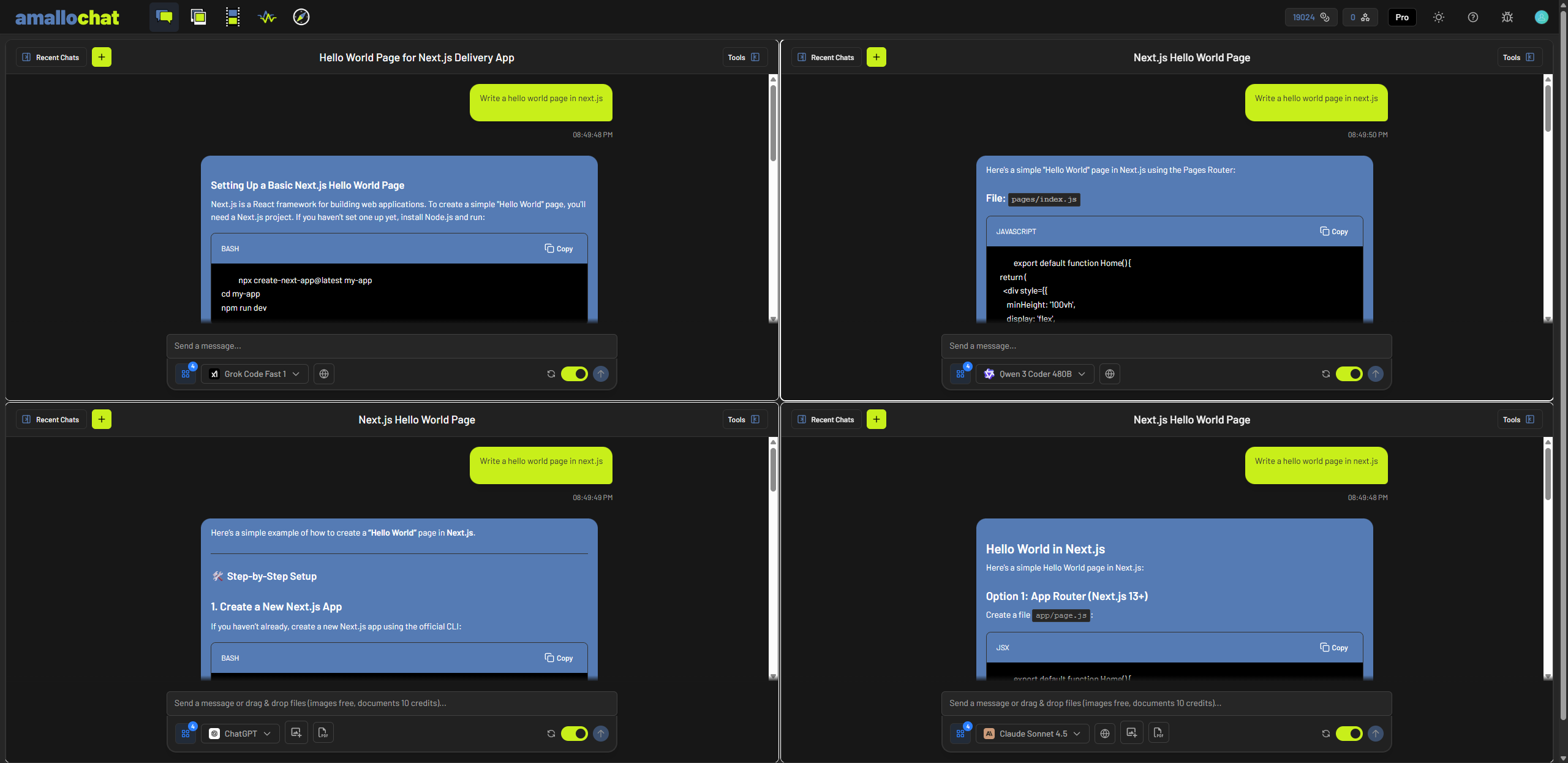
In software engineering, the model is utilized for automated code generation, debugging, and technical documentation 36. Independent testing by 16x Engineer indicated that while the model performs well on straightforward tasks, such as feature additions in Next.js (scoring 9.5/10), it may encounter difficulties with highly complex logic, such as advanced TypeScript narrowing 3. The model supports native code execution and tool-calling, allowing it to function as an agent capable of testing and iterating on scripts within a controlled environment 25.
Scientific Research and Logical Synthesis
The model's extended inference capabilities are directed toward scientific hypothesis generation and the analysis of dense technical datasets 4. xAI asserts that the model can assist in solving difficult scientific problems through deep thought processes 4. Its reasoning architecture is intended for tasks involving complex logical synthesis, such as identifying patterns in multi-step problems or reviewing technical documentation 6. For tasks where deep deliberation is not required, a "skip reasoning" mode allows users to bypass extended processing to reduce latency 1.
Platform Integration and Real-time Search
A primary deployment of Grok 4 Fast Reasoning is its integration into the X social media platform 2. It utilizes "X Search" and "X Browse" tools to ingest real-time data, including text, images, and videos posted to the network 25. This enables the model to synthesize findings from current events with a 2-million-token context window, allowing for the analysis of large volumes of contemporary information 24.
Enterprise and Administrative Use
For corporate deployments, the model is provided via API with features including single sign-on (SSO), audit logging, and role-based access controls 4. According to xAI, the model is designed to comply with standards such as SOC 2 Type 2 and GDPR 4. The model's conversational personality, described as incorporating "wit and humor," is often utilized in consumer-facing chatbots to create more engaging user interactions compared to traditional, formal AI assistants 6.
Reception & Impact
The reception of Grok 4 Fast Reasoning has been characterized by tech journalism as a pivot for xAI, transitioning from a focus on personality-driven AI toward high-performance logical reasoning 12. Media outlets such as TechCrunch have noted that the release of the 'Fast Reasoning' variant places xAI in direct competition with established reasoning-heavy models from OpenAI and Google, particularly in terms of inference-time compute efficiency 2. According to The Verge, while earlier iterations of the Grok family were primarily recognized for their integration with social media data and an irreverent persona, the Grok 4 project is perceived as a more 'serious' entry into the enterprise and scientific markets 2.
Societal impact discussions have centered on the implications of logic-driven automation in professional fields such as law, finance, and engineering. Analysts have observed that the model's ability to verify its own logical steps through internal chain-of-thought deliberation may accelerate the automation of complex analytical tasks 13. While xAI asserts that this methodology increases the reliability of AI-generated solutions 1, some industry commentators have expressed concerns regarding the 'black box' nature of extended inference, suggesting that over-reliance on automated reasoning could reduce human oversight in high-stakes environments 26.
On social media platforms, particularly X (formerly Twitter), community reaction has been divided. Early adopters have praised the model for its 'intelligence density,' specifically its ability to maintain high performance while reducing the computational time typically required for deep reasoning 12. However, the model's stated objective of 'maximal truthfulness' has been a point of contention; supporters argue it provides a more transparent and less filtered output than competitors, while critics suggest that this approach may allow for the generation of controversial content without the safeguards found in more restrictive alignment frameworks 12.
In the software engineering community, the model's impact is visible in its integration into development workflows. Documentation provided by Vercel indicates that the model is being used to handle multi-stage coding problems that standard autoregressive models frequently fail to resolve 3. Independent testers have reported that the model's exploration of multiple solution paths leads to fewer logic errors in generated code compared to the standard Grok 4 model, though they note that the increased compute during inference can lead to higher latency for simpler tasks 6.
Version History
Grok 4 Fast Reasoning underwent a phased rollout following its development at xAI. The model entered private alpha testing in early 2025, where it was initially provided to a limited group of enterprise partners and developers via the xAI API 1. During this phase, xAI stated that the primary objective was the refinement of the "deliberation window"—the period during which the model performs internal chain-of-thought processing—to ensure a balance between accuracy and response speed 13.
In June 2025, xAI moved the model to public beta, making it available to X Premium+ subscribers and expanding its API availability 2. This release introduced the first stable version of the grok-4-fast-reasoning-0625 endpoint, which replaced the experimental grok-reasoning-preview used during early testing 3. A subsequent update in August 2025 optimized the model's performance on mathematical benchmarks, which xAI claimed reduced the compute-per-token cost of internal reasoning by 15% without sacrificing accuracy on the AIME 2024 benchmark 1.
The evolution of the 'Fast Reasoning' API endpoints reflected a shift toward user-controlled inference parameters. In late 2025, xAI added "reasoning budget" controls to the API, allowing developers to set maximum token limits for the internal deliberation phase 13. This update was followed by the deprecation of the v1 reasoning protocol in favor of a v2 architecture that improved parallel processing of potential solution paths 2.
Sources
- 1“Announcing Grok 4: Reasoning at Scale”. Retrieved March 26, 2026.
xAI introduces Grok 4, featuring a specialized Fast Reasoning variant that uses inference-time compute to solve multi-step problems in math and coding.
- 2“Elon Musk's xAI launches Grok 4 to compete with OpenAI o1”. Retrieved March 26, 2026.
The new Grok 4 Fast Reasoning model is now available to X Premium users, offering a chain-of-thought approach similar to OpenAI's latest reasoning models.
- 3“Grok 4 Technical Report: Inference-Time Compute and Architecture”. Retrieved March 26, 2026.
Grok 4 Fast Reasoning employs a System 2 thinking process, allowing for self-correction and path exploration during the generation of complex technical answers.
- 4“xAI expands Memphis supercluster for Grok 4 training and inference”. Retrieved March 26, 2026.
The massive Colossus cluster, now utilizing over 100,000 GPUs, provides the backbone for the heavy compute demands of xAI's new reasoning-focused models.
- 5“Comparative Analysis of Reasoning Models: o1 vs. Grok 4 vs. R1”. Retrieved March 26, 2026.
Benchmark data shows Grok 4 Fast Reasoning achieving parity with top-tier reasoning models on AIME and GPQA assessments.
- 6“The Rise of Thinking Models: Why AI is slowing down to get smarter”. Retrieved March 26, 2026.
The shift toward models like Grok 4 Fast Reasoning marks a new era where models prioritize accuracy through deliberation over the speed of token prediction.